The automotive industry is undergoing a seismic shift, moving away from its century-old mechanical-centric model towards a software-defined, intelligent future. At the heart of this revolution lies Artificial Intelligence (AI), the core technology transforming vehicles from mere modes of transport into sophisticated, connected, and learning platforms. For automakers, tech companies, and stakeholders, developing and implementing a robust AI-driven car platform strategy is no longer a futuristic ambition but a critical imperative for survival and growth. This in-depth exploration delves into the multifaceted strategies essential for building, deploying, and monetizing the next generation of intelligent vehicles, ensuring they are not only powerful machines but also profitable, secure, and deeply integrated into the user’s digital ecosystem.
The Foundational Pillars of an AI Automotive Platform
Before delving into strategy, one must understand the core technological components that make an AI-driven platform possible. These pillars form the bedrock upon which all strategic decisions are made.
A. The Vehicle Sensor Suite: The Digital Nervous System
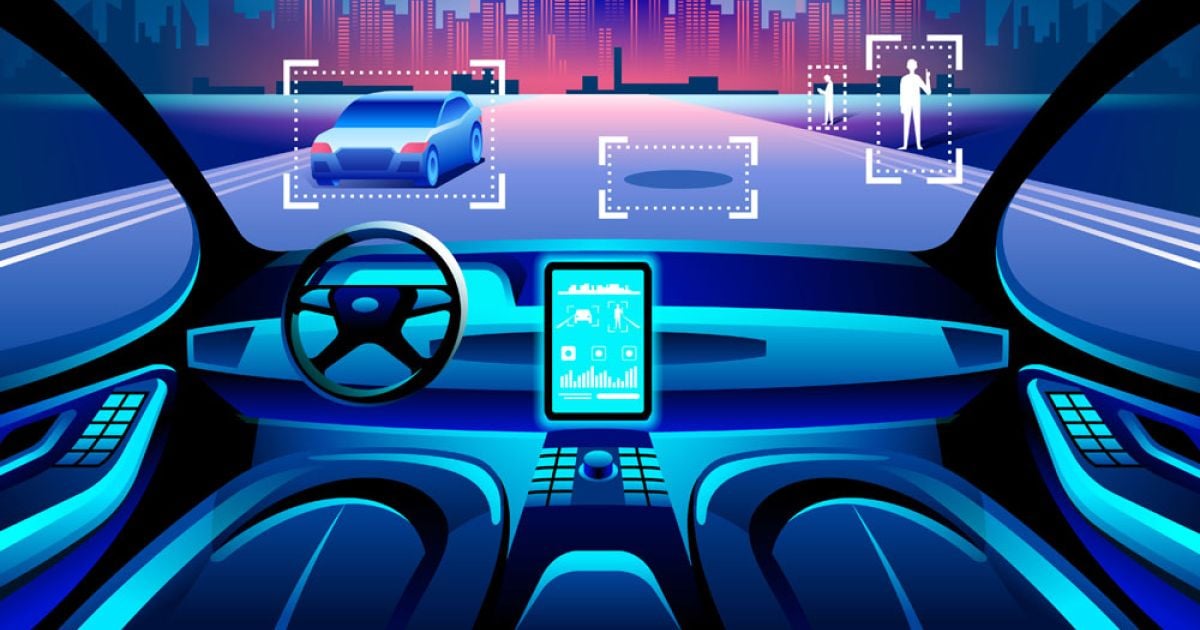
The AI’s perception of the world is entirely dependent on its sensors. This suite includes a combination of cameras, LiDAR (Light Detection and Ranging), radar, ultrasonic sensors, and microphones. Each sensor type has unique strengths; radar excels in velocity detection and performs well in poor weather, LiDAR provides high-resolution 3D mapping, and cameras offer rich visual data for object classification. The strategic choice here involves selecting the right sensor fusion approach combining data from all these sources to create a robust, reliable, and redundant model of the vehicle’s environment, crucial for safety-critical applications.
B. The High-Performance Compute (HPC) Unit: The Onboard Brain
Raw sensor data is meaningless without immense computational power to process it. The in-vehicle AI computer, or HPC, is a powerhouse equipped with specialized processors like GPUs (Graphics Processing Units), NPUs (Neural Processing Units), and FPGAs (Field-Programmable Gate Arrays) designed specifically for parallel processing of neural network algorithms. The strategic decision involves balancing processing power with energy consumption, heat dissipation, and cost. A platform strategy must account for scalable compute architecture that can handle increasingly complex AI models via over-the-air (OTA) updates.
C. Data Infrastructure: The Lifeblood of AI
AI models are hungry for data. An AI-driven platform generates terabytes of data daily. The strategy must encompass a two-tier data pipeline:
-
Edge Processing: Critical data for immediate decision-making (e.g., collision avoidance) must be processed instantaneously within the vehicle.
-
Cloud Syncing: Non-critical data is anonymized, compressed, and transmitted to the cloud. This aggregated fleet data is the fuel for continuous improvement, used to retrain and refine AI models, creating a virtuous cycle of learning and enhancement.
D. Connectivity: The Central Artery
Seamless and high-bandwidth connectivity, primarily through 5G and C-V2X (Cellular Vehicle-to-Everything), is non-negotiable. It enables real-time navigation updates, streaming services, vehicle-to-infrastructure (V2I) communication for smart traffic management, and vehicle-to-vehicle (V2V) communication for enhanced safety. The strategic partnership with telecom providers and the integration of robust, always-on modems are pivotal.
E. The Software Architecture: The Orchestrator
Modern vehicles run on millions of lines of code. A strategic platform requires a flexible software architecture, often based on hypervisors and containers, that allows for isolated functional domains (e.g., infotainment, powertrain, ADAS). This separation ensures that a bug in the music app cannot compromise the braking system. It also enables agile development and OTA updates for specific domains without requiring a full vehicle recall.
Formulating a Winning AI Platform Strategy: A Step-by-Step Guide

Developing a successful strategy requires a holistic approach that aligns technology with business objectives and market demands.
A. Define the Core Value Proposition and Use Cases
The first step is to move beyond generic “AI” and define precise, customer-centric use cases. Is the primary value in Autonomous Driving (Level 2+ hands-free highway driving, Level 4 robotaxis)? Is it in Hyper-Personalization (an cabin that adjusts climate, seating, and entertainment based on occupant biometrics and mood)? Is it in Predictive Maintenance (alerting the user and service center of a potential failure before it happens)? A focused strategy avoids costly feature bloat and targets a specific market segment effectively.
B. Choose the Development Path: Build, Partner, or Acquire?
Few companies possess all the expertise in-house. The strategic path chosen is critical:
-
In-House Development: Offers maximum control and IP ownership but is incredibly capital- and talent-intensive (e.g., Tesla).
-
Strategic Partnerships: Allows for sharing of risk, cost, and expertise. An automaker might partner with a tech giant for its AI stack and a tier-1 supplier for sensor integration (e.g., GM with Google, Ford with Volkswagen on Argo AI).
-
Acquisition: A faster route to acquire technology and talent, but comes with high costs and significant integration challenges.
C. Architect for Data and Continuous Learning
The winning platform will be the one that learns the fastest. The strategy must design a closed-loop data system. This involves:
-
Data Collection: Deploying vehicles with the necessary sensors.
-
Data Triggering & Upload: Automatically flagging and uploading interesting scenarios (e.g., near-miss events, edge cases) to the cloud.
-
Data Labeling: Using a combination of automated tools and human annotators to tag data.
-
Model Training & Validation: Retraining neural networks on this new data in simulated environments.
-
OTA Deployment: Seamlessly pushing the improved AI model back to the entire vehicle fleet.
D. Prioritize Cybersecurity and Functional Safety (ISO 21434 & ISO 26262)
An AI platform introduces vast new attack surfaces. A single vulnerability can lead to catastrophic outcomes. The strategy must embed security-by-design principles from the hardware up through the software stack. This includes secure boot processes, encrypted communications, intrusion detection systems, and establishing a dedicated Security Operations Center (SOC) to monitor the fleet in real-time. Similarly, functional safety standards must be rigorously applied to all AI-driven driving functions.
E. Design the Monetization Model
The massive R&D investment must be recouped. Strategies for monetization are evolving beyond the one-time vehicle sale:
-
Subscription Services: This is the dominant model, offering recurring revenue streams for features like enhanced autopilot, connected services, premium entertainment, and performance boosts.
-
Data-Driven Services: Anonymized aggregate data can be valuable to third parties like municipalities for urban planning, insurance companies for usage-based insurance, and retailers for targeted advertising.
-
Software-Defined Upgrades: Selling new features or capabilities post-purchase via OTA updates, turning the car into a platform that appreciates in value over time.
F. Cultivate the Ecosystem and Developer Platform
The most successful platforms are ecosystems, not just products. Providing APIs and SDKs for third-party developers to create applications for the vehicle’s infotainment system can drastically increase its value and stickiness. Imagine apps for parking reservation, food ordering, or video conferencing tailored for the autonomous driving experience. This transforms the vehicle into a hub for a broader digital lifestyle.
Overcoming Critical Challenges in AI Platform Deployment
The path to an AI-driven future is fraught with hurdles that must be strategically managed.
A. The Immense Computational and Power Burden
Running complex AI models consumes significant electricity, which directly impacts an EV’s range. The strategic race is towards developing more efficient algorithms and hardware that deliver more operations per second per watt (TOPS/W). Quantum-inspired computing and neuromorphic chips are potential long-term solutions.
B. The “Black Box” Problem and Regulatory Hurdles
Many deep learning models are opaque, making it difficult to explain why a specific decision was made. Regulators and consumers demand transparency and accountability. The strategy must include investment in Explainable AI (XAI) techniques to build trust and navigate complex and evolving regulatory landscapes across different global markets.
C. The Scarcity of Specialized Talent
The competition for AI engineers, data scientists, and software architects is fierce. A successful strategy involves not only competitive hiring but also creating partnerships with universities, extensive internal training programs, and establishing tech centers in global talent hubs.
D. Ethical Conundrums and Public Acceptance
AI platforms must be programmed to make split-second ethical decisions in unavoidable accident scenarios. While a theoretical problem, it has real implications for public trust. A strategy must include transparent public engagement, ethical guidelines for developers, and collaboration with industry bodies to establish norms and standards.
The Future Horizon: What’s Next for AI-Driven Cars?
The evolution will not stop. A forward-looking strategy must anticipate and invest in these emerging trends:
-
Vehicle-to-Everything (V2X) Integration: AI will not just be in the car but will communicate with smart roads, traffic lights, and other vehicles, creating a coordinated, efficient, and safe transportation mesh network.
-
Emotional AI (Affective Computing): AI will use interior cameras and voice analysis to understand driver and occupant emotional states, reducing stress by adjusting the driving mode, lighting, or music, and even detecting driver fatigue or medical emergencies.
-
Generative AI in the Cabin: Beyond simple voice assistants, generative AI will power conversational, context-aware co-pilots that can plan routes, answer complex questions, and control vehicle functions through natural, multi-step dialogue.
-
Consolidation and Standardization: The current fragmented market will likely see consolidation around a few dominant platform players (akin to Android or iOS in smartphones) and increased standardization of software interfaces and communication protocols.
Conclusion: Winning the Race with a Cohesive Strategy
The transformation to AI-driven car platforms represents the greatest opportunity and disruption the automotive industry has ever faced. A successful strategy is not a single decision but a complex, interconnected framework that balances technological prowess with sharp business acumen, ethical consideration, and a deep focus on the end-user experience. It requires a long-term vision, patient capital, and a culture of agility and collaboration. The companies that will lead the next decade are those that architect their platforms not just as a collection of features, but as dynamic, learning, and open ecosystems that continuously deliver value, ensuring safety, satisfaction, and sustainable revenue long after the car has left the dealership lot.