In the dynamic landscape of automotive technology, the paradigm of car ownership is shifting from reactive repairs to intelligent, data-driven foresight. The era of waiting for a strange noise or a warning light on your dashboard is rapidly fading into obsolescence. Welcome to the forefront of automotive care: Predictive Car Maintenance. As we navigate through 2025, this technology has evolved from a luxury feature into an indispensable tool for every vehicle owner seeking reliability, safety, and significant cost savings. This definitive guide delves deep into the world of predictive maintenance, offering a thorough exploration of its mechanisms, profound benefits, practical implementation tips, and a visionary look into its future. Our goal is to equip you with the knowledge not just to react, but to predict and prevail.
A. Deconstructing Predictive Maintenance: Beyond Basic Diagnostics
To fully appreciate its value, we must first understand what predictive car maintenance truly is. It is a stark departure from traditional models.
-
Reactive Maintenance: This is the oldest model you drive until a component fails. This often leads to inconvenient breakdowns, secondary damage to interconnected parts, and the highest possible repair bills.
-
Preventive Maintenance: This is the scheduled model based on time or mileage (e.g., an oil change every 5,000 miles or 6 months). While better than reactive, it’s inefficient. You might replace parts that still have plenty of life, or conversely, it might not catch an issue that develops prematurely.
-
Predictive Maintenance (PdM): This is the proactive, data-driven model. It uses real-time sensors and advanced analytics to monitor the actual condition of vehicle components. The system doesn’t guess; it knows. By analyzing trends and anomalies, it can forecast a potential failure before it happens, providing a precise window for service. It’s like having a doctor constantly monitoring your vital signs and warning you of a potential illness weeks in advance.
B. The Technological Pillars Powering Prediction in 2025
The efficacy of predictive maintenance rests on a foundation of cutting-edge technologies that have matured significantly by 2025.
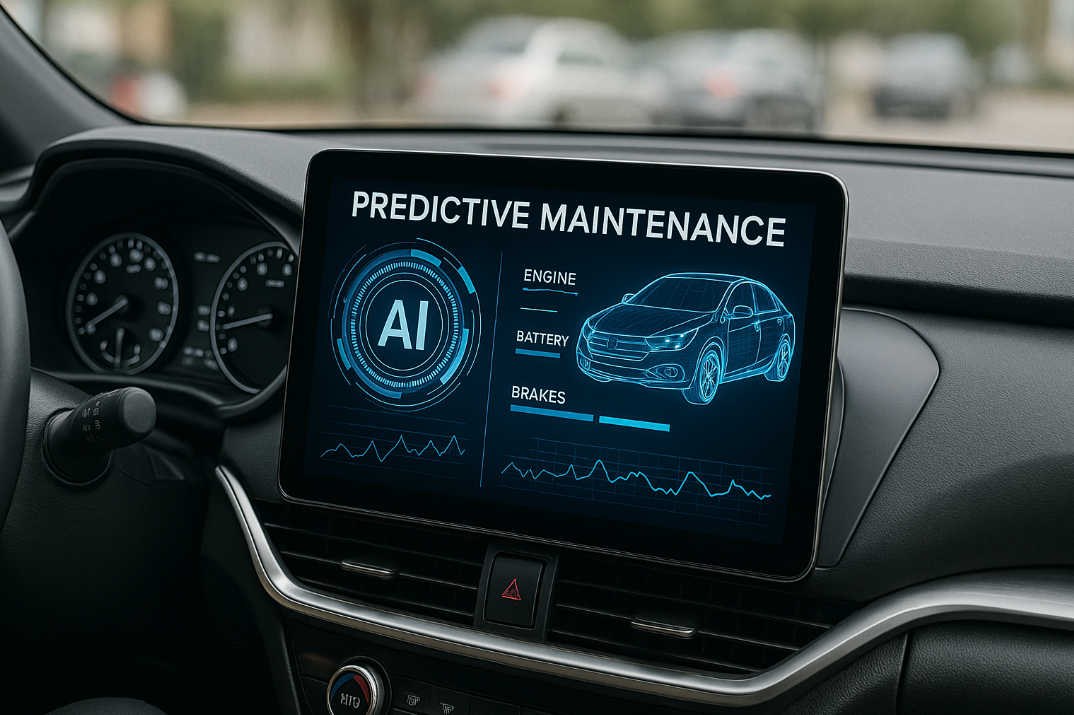
A. The Internet of Things (IoT) and Advanced Sensors: Modern vehicles are essentially supercomputers on wheels, equipped with a network of sophisticated sensors. These are not just simple pressure or temperature gauges. They are advanced micro-monitors that track:
-
Vibration Analysis: Abnormal vibrations in the engine, transmission, or wheels can indicate imbalances, misalignments, or bearing wear.
-
Thermal Imaging: Sensors can detect unusual heat patterns in the braking system, electrical components, or engine bay, signaling impending failures.
-
Acoustic Monitoring: Microphones can detect subtle changes in sound frequency from the engine or drivetrain that are inaudible to the human ear.
-
Fluid Quality Analysis: Sensors can now analyze the chemical composition and contamination levels of engine oil, coolant, and brake fluid in real-time, assessing their protective capabilities rather than just their level.
B. Artificial Intelligence (AI) and Machine Learning (ML): Data alone is meaningless without interpretation. This is where AI and ML become the brain of the operation. These systems consume the vast streams of data from the sensors, learning what “normal” looks like for your specific driving habits and vehicle. Over time, they identify patterns and tiny deviations that precede a failure. The system doesn’t just compare your data to a generic model; it personalizes the analysis, making predictions astonishingly accurate.
C. Cloud Computing and Big Data Analytics: The immense volume of data generated by your car is processed not in the vehicle itself, but in powerful cloud servers. This allows for the aggregation and anonymized analysis of data from millions of vehicles. By comparing your car’s performance to a massive global fleet, the system can identify widespread issues, model failure rates for specific parts under certain conditions, and continuously refine its predictive algorithms for everyone’s benefit.
D. Over-the-Air (OTA) Updates: A key feature of modern connected cars, OTA updates allow manufacturers to remotely improve the predictive algorithms themselves. They can push new software that enhances diagnostic capabilities, adds monitoring for new parameters, or refines alert thresholds, ensuring your car’s predictive brain gets smarter over time.
C. The Multifaceted Advantages of Adopting a Predictive Approach
The investment in understanding and utilizing predictive maintenance pays dividends across multiple facets of vehicle ownership.
A. Substantial Financial Savings: This is the most compelling benefit. By addressing issues early, you prevent minor, inexpensive problems from snowballing into major, catastrophic failures. Replacing a worn sensor is a fraction of the cost of replacing an entire engine damaged by running without that sensor’s protection. You also maximize the usable life of all components, changing them only when necessary, not just because a calendar says so.
B. Enhanced Safety and Reliability: Predictive maintenance is, first and foremost, a critical safety feature. The ability to foresee potential brake system degradation, tire failure, or steering component issues before they lead to a dangerous situation on the road is invaluable. It transforms your vehicle from a potential liability into a trusted, reliable partner, especially on long journeys or in extreme weather conditions.
C. Unparalleled Convenience and Peace of Mind: Gone are the days of surprise breakdowns and the associated stress, towing costs, and scheduling nightmares. Predictive systems provide advanced notice, allowing you to schedule service at your convenience, often with a precise diagnosis already sent to your mechanic. This eliminates diagnostic fees and reduces vehicle downtime significantly.
D. Optimized Vehicle Performance and Longevity: Continuous health monitoring ensures your car always operates at its peak efficiency. Properly maintained components lead to better fuel economy, smoother operation, and higher resale value. By preventing major failures, you dramatically extend the overall lifespan of the vehicle, protecting your long-term investment.
E. Positive Environmental Impact: Predictive maintenance promotes sustainability. It reduces waste by ensuring parts are used for their full lifespan. It improves fuel efficiency, lowering emissions. Furthermore, it prevents leaks and malfunctions that could lead to harmful fluids contaminating the environment.
D. Implementing Predictive Maintenance in Your 2025 Driving Life
You don’t necessarily need a brand-new luxury car to benefit from these principles. Here’s how to integrate predictive maintenance into your life.
A. For Owners of Newer Connected Vehicles:
-
Master Your Manufacturer’s App: Most brands offer a dedicated smartphone application (e.g., MyBMW, Toyota App, FordPass). Explore all its features. Enable push notifications for all vehicle health alerts.
-
Subscribe to Connected Services: Ensure your subscription to the manufacturer’s telematics service (e.g., OnStar, BMW ConnectedDrive, Mercedes me) is active. This is the conduit for data transmission and remote features.
-
Schedule Based on Data, Not Mileage: Use the vehicle’s own maintenance tracking system. When it alerts you to service soon, schedule it promptly. Trust the data it provides.
B. For Owners of Older Vehicles (Retrofitting):
-
Use an On-Board Diagnostic (OBD2) Dongle: This is the most effective way to add predictive capabilities to an older car. Plug a device like those from Automatic, Veepeak, or FIXD into your car’s OBD2 port (usually under the dashboard).
-
Pair with a Smartphone App: These dongles connect to an app on your phone via Bluetooth. They can read engine codes, monitor check engine lights, track trips, and some advanced models can even provide insights into engine health based on data from the vehicle’s internal computers.
-
Consider Aftermarket Sensors: For specific concerns, you can install aftermarket sensors. For example, tire pressure monitoring systems (TPMS) can be added to wheels that didn’t come with them, and battery monitors can track health and predict failure.
C. Choosing the Right Repair Shop:
-
Seek Out “Smart” Technicians: Not all mechanics are equipped to handle data-driven diagnostics. Look for shops that advertise themselves as using advanced diagnostics, have certified technicians, and are familiar with working with the data logs from your specific vehicle or dongle.
-
Share the Data: When you get an alert, don’t just say “my car says there’s an engine problem.” Show the mechanic the exact alert, the code, and the data history from your app. This empowers them to make a faster and more accurate diagnosis.
E. Navigating the Challenges and Ethical Considerations
While transformative, predictive maintenance is not without its hurdles.
A. Data Privacy and Security: Your car collects immense amounts of data about your driving location, habits, and vehicle health. It is crucial to understand who owns this data (you or the manufacturer?), how it is being used, and with whom it is shared. Review privacy policies and adjust your settings to limit data sharing if desired. Furthermore, connected cars are potential targets for hackers, making robust cybersecurity measures non-negotiable for manufacturers.
B. The Digital Divide and Accessibility: The latest predictive technology is often reserved for higher-trim models or luxury brands, creating a gap between those who can afford it and those who cannot. The cost of retrofitting with advanced dongles and sensors, while lower than a new car, is still a barrier for some.
C. Over-Reliance on Technology: Technology can fail. Sensors can malfunction, and algorithms can have flaws. It is vital to maintain a basic awareness of your vehicle. Never ignore obvious signs like strange smells, sounds, or handling issues simply because a predictive system hasn’t alerted you yet. Use the technology as a powerful aid, not a replacement for your own senses and judgment.
F. The Future Horizon: What Lies Beyond 2025?
The evolution of predictive maintenance is accelerating. Here’s what we can expect next:
-
Integration with Smart Cities: Your car will communicate with infrastructure (smart traffic lights, road sensors) to receive data about road conditions, warning you to check your suspension or tires after traveling on a particularly rough stretch of road.
-
Predictive Parts Logistics: The system will not only predict a failure but also automatically order the necessary part and schedule an appointment at your preferred dealership, all before you’re even aware of the issue.
-
Blockchain for Maintenance History: Immutable blockchain ledgers will be used to store a vehicle’s complete maintenance history, providing a transparent and tamper-proof record that enhances resale value and simplifies repairs.
-
Even More Granular Sensing: Nanotechnology and more advanced biosensors for fluids will provide atomic-level analysis of component wear, pushing prediction windows from weeks to months.
Conclusion: Embracing the Inevitable Shift
Predictive car maintenance is no longer a futuristic concept; it is the operational standard for 2025 and the foundation for the autonomous vehicles of tomorrow. It represents a profound leap forward in how we interact with and care for our vehicles. By harnessing the power of data, AI, and connectivity, we are moving into an era of unprecedented automotive safety, efficiency, and convenience. Whether you drive a state-of-the-art electric vehicle or a trusted older model, taking steps to adopt a predictive mindset will undoubtedly save you money, time, and stress. The road ahead is intelligent, connected, and predictable it’s time to tune in.