The urban landscape is undergoing a seismic shift, not just in its skyline but on its streets. The familiar sight of cars gridlocked in traffic is slowly giving way to a new era of intelligent, connected, and efficient transportation. This transformation is powered by the smart city car technology revolution, a convergence of automotive innovation and digital infrastructure that promises to redefine our very relationship with the vehicle and the city itself. This is more than just incremental change; it’s a complete overhaul of mobility, aiming to solve perennial urban problems like congestion, pollution, and safety. This in-depth guide explores the core technologies, their profound implications, and the future they are building.
Introduction: The Convergence of Car and City
For over a century, the car was a standalone product a marvel of mechanical engineering largely isolated from its environment. Today, that paradigm is shattered. The modern vehicle is a rolling data center, a connected node in a vast Internet of Things (IoT) ecosystem. Simultaneously, cities are embedding intelligence into their infrastructure, from traffic lights to lampposts. The revolution occurs at the intersection of these two evolutions. When a car can communicate with the road it drives on, the network it connects to, and other vehicles around it, we unlock unprecedented possibilities for efficiency, safety, and sustainability. This guide delves into the technologies making this possible and paints a picture of the future they are creating.
A. The Core Pillars of Connected Vehicle Technology
The smart car revolution is built upon several foundational technologies that work in concert. Understanding these pillars is key to grasping the full scope of the change.
1. Vehicle-to-Everything (V2X) Communication: This is the bedrock technology. V2X is an umbrella term for a car’s ability to communicate with its environment.
-
Vehicle-to-Vehicle (V2V): Cars form an ad-hoc network, continuously exchanging data on speed, position, direction, and braking status. This allows them to “see” around corners and anticipate potential collisions far beyond the range of any sensor.
-
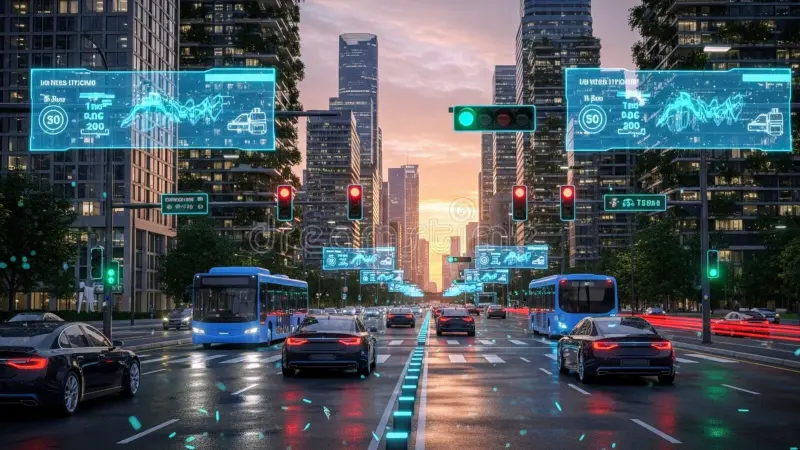
Vehicle-to-Infrastructure (V2I): Cars communicate with smart infrastructure like traffic lights, digital road signs, and parking meters. A traffic light can send its signal phase and timing data to an approaching car, allowing it to adjust speed to catch a green wave, reducing unnecessary braking and acceleration.
-
Vehicle-to-Network (V2N): This connects the car to the cloud via cellular networks (4G/5G), enabling real-time traffic updates, over-the-air (OTA) software updates, and access to cloud-based entertainment and navigation services.
-
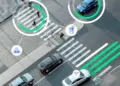
Vehicle-to-Pedestrian (V2P): Using smartphones or dedicated wearable devices, pedestrians can be detected by vehicles, providing alerts to both the driver and the pedestrian to prevent accidents, especially in low-visibility conditions.
2. Advanced Driver-Assistance Systems (ADAS): While not fully autonomous, ADAS is the critical stepping stone. These systems use a suite of sensors cameras, radar, lidar, and ultrasonic to perceive the world and assist the driver.
-
Adaptive Cruise Control (ACC): Maintains a set speed and a safe following distance from the car ahead.
-
Lane Keeping Assist (LKA) and Lane Centering: Gently steers the car to keep it within its lane.
-
Automatic Emergency Braking (AEB): Detects an imminent collision and applies the brakes if the driver fails to respond.
-
Traffic Jam Assist: Combines ACC and LKA to take over steering, acceleration, and braking in slow-moving traffic.
3. Over-the-Air (OTA) Updates: Traditionally, a software bug in a car required a visit to the dealership. OTA updates transform the car into a upgradable device, much like a smartphone. Manufacturers can remotely deploy updates to improve performance, add new features, fix bugs, and enhance security, ensuring the vehicle gets better over time.
4. 5G and Edge Computing: The high-speed, low-latency capabilities of 5G networks are essential for transmitting the massive amounts of data generated by connected cars instantaneously. Edge computing processes this data closer to the source (e.g., at a cellular tower or within the car itself) rather than sending it to a distant cloud server. This minimizes delay, which is absolutely critical for split-second safety decisions in V2X communication.
B. Tangible Benefits: How Smart Car Tech Transforms Urban Life
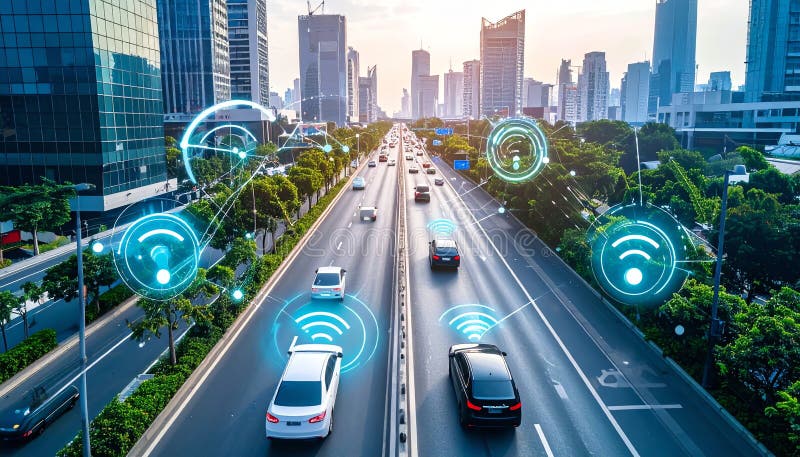
The integration of these technologies is not for its own sake; it delivers concrete, life-improving benefits for citizens and city administrators alike.
1. Enhanced Road Safety and Accident Prevention: The most significant benefit is the potential to save lives. V2V communication can warn drivers of hazardous conditions, sudden braking several cars ahead, or a vehicle approaching blindly from an intersection. When combined with ADAS features like AEB, this creates a robust safety net that can dramatically reduce the number of accidents caused by human error, which account for the vast majority of crashes.
2. Radical Reduction in Traffic Congestion: Congestion is not just an inconvenience; it’s a massive economic drain and a source of pollution. Smart car technology attacks this problem from multiple angles.
-
Optimized Traffic Flow: V2I communication allows traffic management systems to see the bigger picture. They can dynamically adjust signal timings based on real-time traffic flow rather than pre-programmed schedules, smoothing out stop-and-go traffic.
-
Eco-Friendly Routing: Navigation systems can direct drivers along the most fuel-efficient route, considering traffic, topography, and even signal timing, reducing overall travel time and idling.
-
Incident Management: Accidents and breakdowns can be detected instantly via V2X data, allowing authorities to respond faster and alert other drivers to reroute, preventing secondary congestion.
3. Environmental Sustainability and Emission Control: By smoothing traffic flow, reducing idling, and optimizing routes, smart technology directly reduces fuel consumption and, consequently, greenhouse gas emissions. Furthermore, it is a key enabler for electric vehicles (EVs). Smart systems can:
-
Guide drivers to available charging stations.
-
Integrate with the power grid for smart charging (charging when demand is low).
-
Enable Vehicle-to-Grid (V2G) technology, where EVs can act as mobile energy storage units, sending power back to the grid during peak hours to stabilize it.
4. The Rise of New Mobility Services: Connectivity enables innovative business models that challenge traditional car ownership.
-
Mobility-as-a-Service (MaaS): Platforms integrate various transport options ride-hailing, car-sharing, public transit, e-scooters into a single app for seamless planning, booking, and payment.
-
Connected Fleets: Ride-hailing and car-sharing services use connectivity to manage their fleets efficiently, monitor vehicle health, and ensure driver and passenger safety.
C. Overcoming the Challenges on the Road Ahead
Despite its immense potential, the smart car revolution faces significant hurdles that must be addressed for widespread adoption.
1. Cybersecurity and Data Privacy: A connected car is a potential target for hackers. A successful cyberattack could compromise personal data, disable a vehicle, or even take control of its critical systems. Manufacturers must implement robust, multi-layered security protocols from the ground up. Furthermore, the vast amount of data collected on driving habits, location, and personal preferences raises serious privacy concerns that require clear regulations and transparent user consent policies.
2. Infrastructure Investment and Standardization: The vision of V2I communication requires cities to make massive investments in upgrading their infrastructure with sensors and communication modules. This creates a “chicken and egg” problem: are smart cars needed to justify smart roads, or vice versa? Additionally, global standardization of communication protocols is crucial. A car from one manufacturer must be able to communicate seamlessly with infrastructure and vehicles from any other manufacturer.
3. Digital Equity and Accessibility: There is a risk that these advanced technologies could exacerbate social inequalities. Will smart mobility services only be available in affluent urban centers? Will the cost of connected vehicles put them out of reach for lower-income families? Ensuring equitable access and preventing a new “digital divide” in transportation is a critical societal challenge.
4. Regulatory and Legal Frameworks: Current traffic laws and liability insurance models are built around human drivers. As vehicles become more automated and connected, new legal frameworks are needed to answer complex questions: Who is at fault in an accident involving a hacked vehicle? How is data ownership defined? Governments and international bodies must work closely with industry to develop agile and forward-thinking regulations.
D. The Future Horizon: What’s Next for Smart Urban Mobility?
The technology continues to evolve at a breakneck pace. The next decade will likely see the maturation of trends we are only beginning to glimpse today.
-
Full Integration with Autonomous Driving: The ultimate expression of smart car tech is full autonomy. V2X data will act as a super-sensor for self-driving cars, giving them a 360-degree, non-line-of-sight awareness that no amount of onboard sensors could achieve alone, making autonomy safer and more reliable.
-
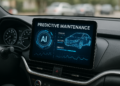
Predictive Artificial Intelligence: AI will move from reactive to predictive. By analyzing historical and real-time data, systems will predict traffic bottlenecks, potential accident zones, and maintenance needs before they occur, allowing for preemptive action.
-
The Software-Defined Vehicle: The car’s value will increasingly lie in its software and user experience rather than its hardware. Owners will subscribe to features on demand, from enhanced performance packs to advanced entertainment suites, personalizing their vehicle throughout its lifecycle.
Conclusion: Building a Smarter, Smoother, and Safer Future
The smart city car technology revolution is not a distant sci-fi fantasy; it is unfolding in real-time on streets around the world. It represents a fundamental shift from isolated transportation to an integrated, intelligent mobility network. While challenges around security, infrastructure, and equity are real, the potential benefits saved lives, reclaimed time, cleaner air, and more livable cities are too profound to ignore. The successful transition to this new era will require unprecedented collaboration between automotive manufacturers, tech companies, city planners, policymakers, and citizens. The result will be a future where the journey is not just a means to an end, but a safer, more efficient, and more enjoyable experience for all.