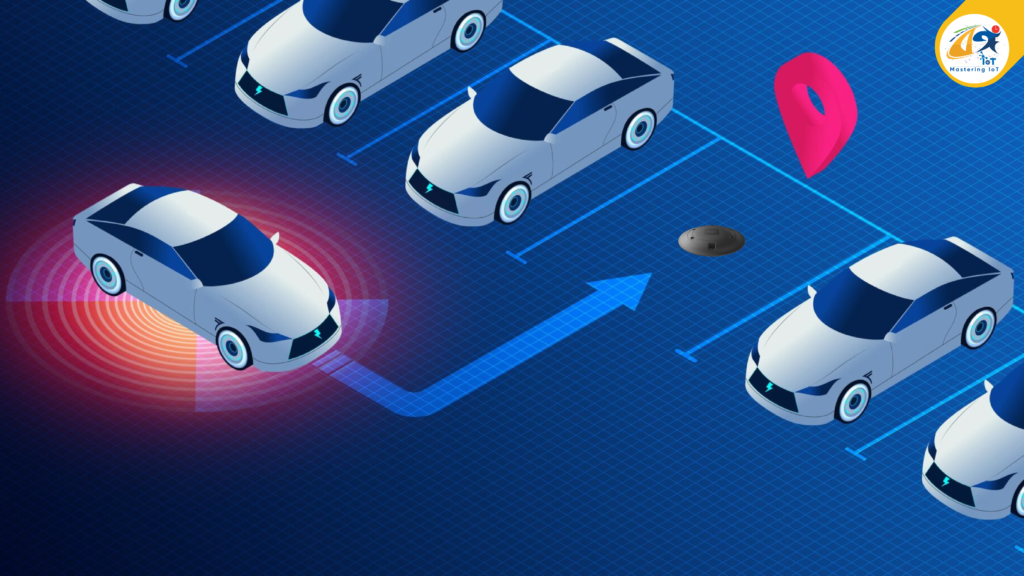
In the heart of every modern metropolis lies a silent, daily struggle that costs billions: the search for a parking space. Urban drivers spend an average of 15-20 minutes per trip circling blocks, burning fuel, increasing emissions, and elevating stress levels. This isn’t just a minor inconvenience; it’s a massive inefficiency that cripples urban logistics, hampers economic productivity, and significantly contributes to environmental pollution. The traditional model of parking drive, circle, park, pay is fundamentally broken. However, a technological revolution is quietly unfolding, poised to solve this century-old problem. Smart Parking Solutions, leveraging a fusion of Internet of Things (IoT) sensors, data analytics, and user-centric applications, are not merely offering incremental improvements; they are fundamentally revolutionizing urban mobility, making cities more livable, sustainable, and efficient. This in-depth exploration delves into the core technologies, multifaceted benefits, implementation challenges, and future trends of this critical urban innovation.
A. The Core Technologies Powering the Smart Parking Revolution
The ecosystem of a smart parking system is an intricate network of hardware and software components working in seamless harmony. Understanding each layer is key to appreciating the revolution.
A.1. IoT Sensors and Detection Systems: The foundational layer of any smart parking solution is its network of sensors. These are the “eyes” of the system, and they come in several forms:
-
In-Ground Sensors: These are embedded directly into parking asphalt or concrete. Using technologies like ultrasonic or electromagnetic fields, they detect the presence of a vehicle in a specific stall with remarkable accuracy. They are discreet and robust but can require more invasive installation.
-
Overhead Sensors and Cameras: Mounted on light poles, signage, or dedicated structures, these use video analytics or LiDAR to monitor multiple spaces simultaneously. Advances in machine learning allow these cameras to not only detect occupancy but also read license plates for integrated payment and security enforcement.
-
Radar Sensors: Offering a balance between coverage and privacy, radar sensors can monitor several spaces and are unaffected by weather conditions like fog or rain that might impair cameras.
A.2. Data Gateways and Connectivity: The raw data from thousands of sensors is meaningless without a way to centralize it. This is where connectivity protocols come in. Data is wirelessly transmitted from sensors to local gateways using low-power, wide-area network (LPWAN) protocols like LoRaWAN or NB-IoT. These are ideal for their long range and minimal power consumption, allowing sensors to operate for years on a single battery. The gateways then aggregate this data and transmit it to the cloud platform via cellular or wired internet connections.
A.3. Central Management Software (CMS): This is the “brain” of the operation. The CMS is a powerful cloud-based platform that processes the vast influx of sensor data in real-time. It performs several critical functions:
-
Real-Time Space Mapping: It creates a live digital map of all parking assets, updating the status (occupied/vacant) of every single space continuously.
-
Data Analytics and Prediction: By analyzing historical data patterns, the CMS can predict parking availability for specific times of day, days of the week, or during special events. This enables dynamic pricing and proactive management.
-
Integration Hub: It seamlessly integrates with other systems, including payment gateways, parking enforcement software, and city traffic management centers.
A.4. User-End Applications: The revolution is delivered to the user through intuitive mobile apps and web interfaces. These applications provide:
-
Real-Time Navigation: Turn-by-turn guidance to the nearest available spot, drastically reducing search time.
-
Reservation and Pre-Booking: The ability to reserve and pay for a spot in advance, guaranteeing parking for meetings, events, or airport travel.
-
Digital Payment: Cashless, hassle-free payment through integrated systems like Apple Pay, Google Wallet, or credit cards, often including options for extended time remotely.
-
Receipts and History: Digital records of all parking transactions for personal or business expense tracking.
B. The Multifaceted Benefits: Beyond Just Finding a Spot
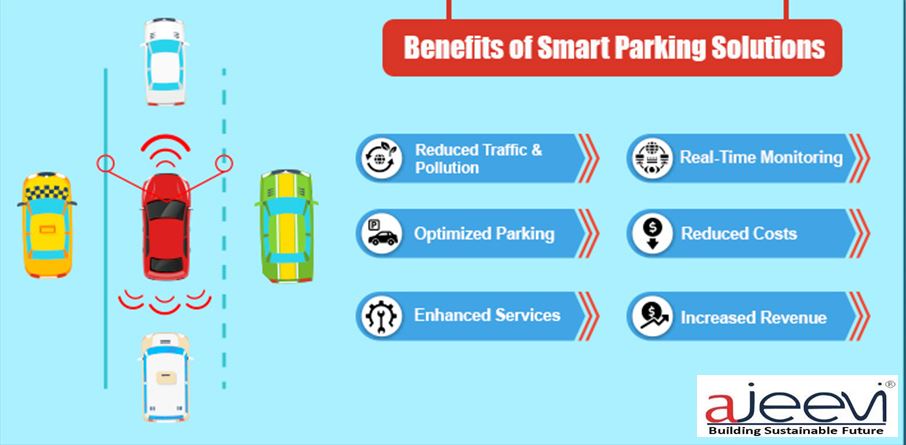
The advantages of implementing smart parking solutions extend far beyond the individual driver, creating a ripple effect of positive outcomes across the city.
B.1. For the Individual Driver:
-
Time and Fuel Savings: The most immediate benefit. Reducing search time by even 10 minutes per day saves a commuter over 40 hours a year.
-
Reduced Stress and Enhanced Convenience: The elimination of “parking anxiety” leads to a calmer, more predictable commute.
-
Cost Optimization: Drivers can compare prices for different lots and garages and choose the most economical option. Pre-booking can also lock in better rates.
-
Improved Safety: Less circling means fewer distracted drivers and reduced congestion in pedestrian-heavy areas.
B.2. For Businesses and Commercial Entities:
-
Increased Revenue Generation: Dynamic pricing allows operators to adjust rates based on demand (e.g., higher during events, lower during off-peak hours), maximizing occupancy and profitability.
-
Operational Efficiency: Automated payment and enforcement reduce the need for manual patrolling and physical meter maintenance, significantly lowering labor costs.
-
Valuable Business Intelligence: Data on parking patterns helps businesses understand customer flow, peak hours, and average dwell times, informing better business and marketing strategies.
-
Enhanced Customer Experience: Retailers and restaurants can validate parking or offer parking discounts as a value-added service, directly improving the customer journey.
B.3. For City Planners and Municipal Governments:
-
Traffic Congestion Reduction: Studies show that up to 30% of urban traffic is caused by drivers searching for parking. Smart parking directly alleviates this, leading to smoother traffic flow and shorter commute times for everyone.
-
Environmental Impact Mitigation: Reduced idling and circling translates directly into lower greenhouse gas emissions (CO2) and improved local air quality (NOx, particulate matter).
-
Data-Driven Urban Planning: The wealth of data collected informs long-term infrastructure decisions. Cities can identify underserved areas, optimize public transit routes, and make evidence-based choices about future parking facility development.
-
Optimized Enforcement: Enforcement officers can be directed to specific violations (e.g., expired payments, unauthorized use of disabled spots) rather than patrolling randomly, making their work more efficient and effective.
C. Key Challenges and Considerations for Implementation

Despite its immense potential, the path to widespread smart parking adoption is not without obstacles.
C.1. Significant Initial Investment: The upfront cost of hardware (sensors, gateways), software licensing, and installation can be prohibitively high for some municipalities or private operators. Calculating the long-term ROI through increased revenue and reduced costs is crucial for securing funding.
C.2. Infrastructure and Integration Hurdles: Retrofitting existing parking structures and on-street spaces with technology can be logistically complex. Furthermore, integrating the new smart system with legacy payment systems, city databases, and enforcement protocols requires careful planning and technical expertise.
C.3. Data Privacy and Security Concerns: These systems collect vast amounts of data, including vehicle location and movement patterns. Cities and operators must implement robust cybersecurity measures to prevent breaches and establish clear, transparent policies on data ownership, usage, and anonymization to maintain public trust.
C.4. Technological Reliability and Maintenance: Sensors must function accurately in all weather conditions and withstand constant wear and tear. A reliable maintenance protocol is essential to address faulty sensors, network outages, or software bugs to ensure system integrity.
C.5. Digital Divide and User Adoption: The benefits are primarily accessed through smartphones and digital literacy. Cities must consider equitable access for all citizens, potentially offering alternative payment methods like toll-free numbers or kiosks to avoid excluding segments of the population.
D. The Future of Smart Parking: Integration and Autonomy
The evolution of smart parking is rapidly converging with other technological trends, pointing towards an even more autonomous and integrated future.
D.1. Integration with Broader Smart City Ecosystems: Smart parking will not exist in a vacuum. Its data will feed into a city’s central nervous system, interacting with smart traffic lights to optimize flow based on congestion, guiding autonomous vehicles, and providing real-time data to public transit apps for seamless multi-modal journey planning.
D.2. Autonomous Vehicle (AV) Valet Parking: The endgame for parking efficiency. Self-driving cars will be able to drop passengers off at their destination and then navigate independently to an optimally located parking space or even a high-density, automated parking structure where vehicles are stacked mechanically without any human intervention. This could free up massive amounts of prime urban land currently dedicated to parking lots.
D.3. Advanced Predictive Analytics and AI: Artificial intelligence will move beyond prediction to prescriptive management. AI could automatically manage entire city-wide parking inventories, set dynamic prices to perfectly balance supply and demand, and even pre-emptively suggest alternative transportation options when parking saturation is predicted.
D.4. Vehicle-to-Infrastructure (V2I) Communication: Future cars will communicate directly with parking infrastructure. A space could “broadcast” its availability to approaching vehicles, which then automatically navigate to it and handle payment through a embedded digital identity, creating a truly frictionless experience.
E. Real-World Case Studies of Successful Implementation
-
San Francisco, USA (SFpark): A pioneering project that implemented demand-responsive pricing. Sensors monitored space occupancy and prices were adjusted to maintain a target occupancy rate of 60-80%. The result was a 16% reduction in time spent searching for parking and a 30% reduction in greenhouse gas emissions in pilot areas.
-
Dubai, UAE (RTA): Dubai’s Roads and Transport Authority has deployed a comprehensive smart parking system (“Parking”) across thousands of spots. Drivers use an app to find, pay for, and extend parking sessions. The system is integrated with the city’s wider smart initiatives and has dramatically improved compliance and user satisfaction.
-
Beijing, China: Facing extreme parking shortages, Beijing has embraced smart parking on a massive scale. The city uses extensive camera networks and AI to manage on-street parking and has built large automated robotic parking garages where vehicles are parked and retrieved by machines, maximizing space utilization.
Conclusion: Parking as a Seamless Service
The smart parking revolution is about much more than just helping drivers find an empty spot. It represents a fundamental shift in how we view and manage urban mobility assets. It redefines parking from a frustrating, isolated activity into a seamless, data-driven service that is fully integrated into the urban fabric. By harnessing the power of IoT, data, and AI, cities can unlock tremendous economic, environmental, and social value. While challenges remain, the trajectory is clear: the future of parking is smart, connected, and invisible, freeing our cities from congestion and our minds from one of daily life’s most persistent annoyances. The road ahead is not just smarter; it’s clearer and far more efficient.